 Tropilaelaps spread up to 2025. (Already out of date, since they have since been confirmed in Turkey.) Image credit: PHIRA Science.
Why travel to the Republic of Georgia to see these mites?
First of all, the mites are found in just a few countries in the world, so (thankfully) if an American wants to see them we need to hop on an airplane. So I had to go somewhere. Tropilaelaps mites have been confirmed (or at least reported) in Iran, Afghanistan, the Crimean peninsula of Ukraine… and Georgia. Given those options, Georgia certainly seemed like one of the best options for an American traveler!
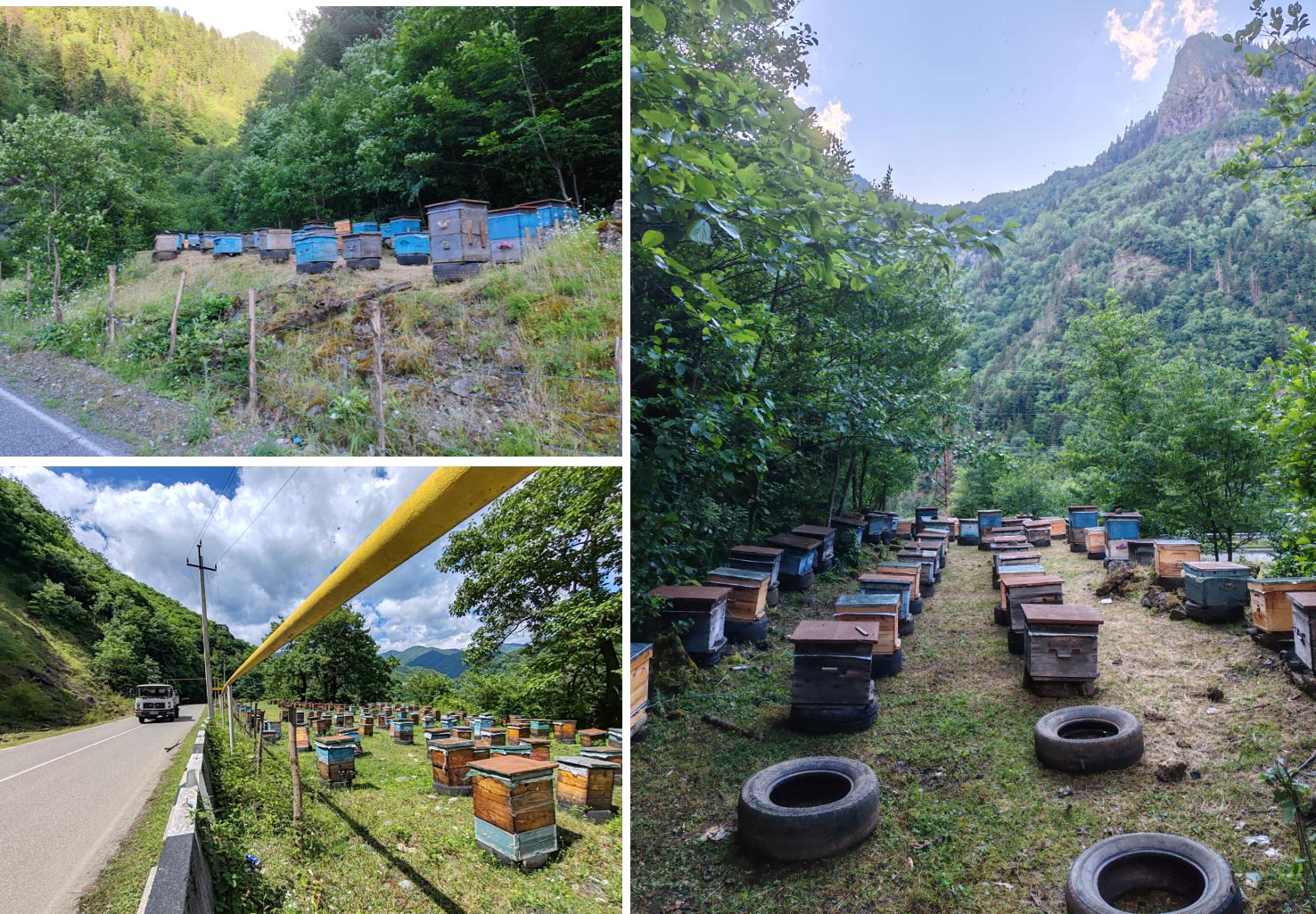
Second, Georgia has a beekeeping tradition that is very similar to beekeeping in the United States. Because of the country's mountainous terrain, beekeepers often transport their large hives in trucks from apiary to apiary to chase nectar flows up and down the mountains. This means that Georgian beekeeping is a closer match to US beekeeping practices than the beekeeping practiced in Thailand, which usually involves small and stationary hives that don’t make much honey per hive.
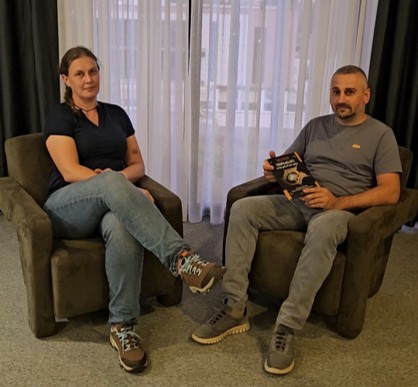
Third, Georgia is the home of Irakli Janashia, a Georgian beekeeper, veterinarian, and Ph.D. researcher who has been studying the mites since they arrived in his home country. In collaboration with Maggie Gill, a UK-based researcher at the heart of the bee health research nonprofit PHIRA Science, Georgia has become the nexus of an incredibly productive research program that is exploring Tropilaelaps biology and pushing the boundaries of human knowledge about this pest. Maggie and Irakli were the main hosts of the conference that allowed me and many other bee researchers and educators to come to Georgia.
Pictured below: Various Georgian apiaries. Image credit: Maggie Gill and PHIRA Science and Maggie Gill and Irakli Janashia, holding a copy of the book that they co-authored all about Tropilaelaps biology.
And so, off to Georgia I went
The Republic of Georgia is a beautiful, mountainous country located on the eastern coast of the Black Sea. Georgia (as well as Armenia and Azerbaijan) is sandwiched between Russia to the north, Turkey to the west, and Iran to the south. The country has been at the crossroads of many human cultures since the dawn of human history. Many beekeepers talk about how “honey has been found in Egyptian tombs”. The archaeological evidence for that isn’t strong, but there is clearly documented use of honey in an ancient Georgian tomb. Despite being a former Soviet republic (and the birthplace of a famous Soviet named Joseph Stalin), most Georgians refuse to speak Russian since the 2008 Russian occupation of about 20% of Georgia’s landmass (including the home of Irakli, the Georgian bee researcher who generously welcomed us to his country.) Since few people can read or speak the native Georgian language, most Georgians, signs, and menus are comfortable with English as a second language, making it very easy for an American to navigate the country and culture.


The SWARM 2026 Conference
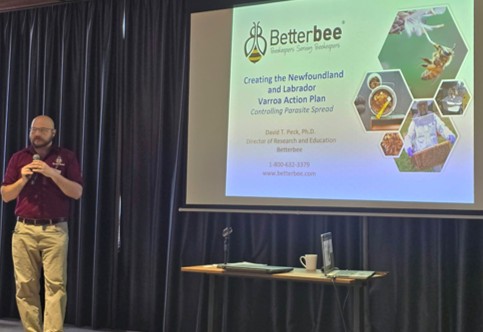
The invite-only conference on Tropilaelaps biology was called “SWARM 2026”. Attendees included scientists, miticide companies, beekeepers, bee inspectors, and beekeeping educators. We came from all over Europe and North America to learn more about these mites, and to share our different perspectives and expertises on how to fight them and how to help beekeepers prepare for them. I was asked to present about my experience with the (so-far successful) project to keep the Canadian province of Newfoundland and Labrador free of varroa mites, and to talk about how that might relate to plans to keep Tropilaelaps out of different countries.
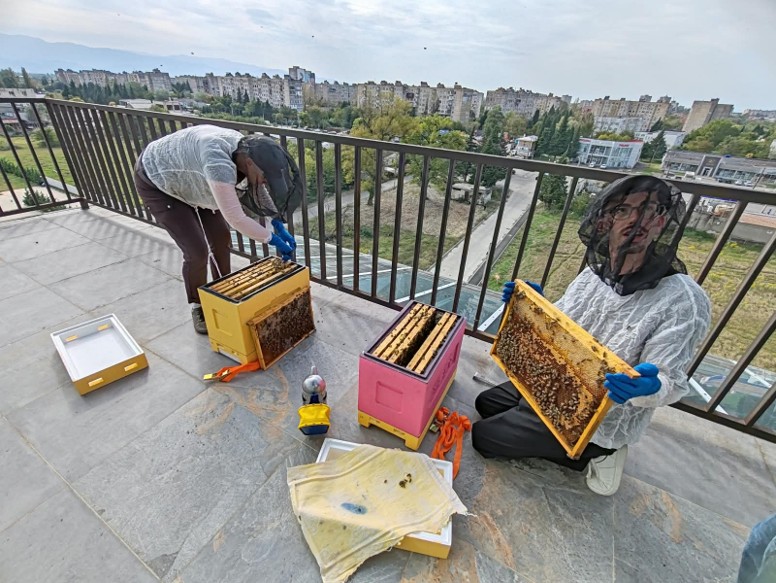
We got hands-on experience working with highly mite-infested hives that Irakli had left untreated so that we could see how badly the mites impact bees. Wearing Packable Pullover veils that Betterbee donated, we all had a chance to work the bees right on the balcony of the hotel where we held the conference.
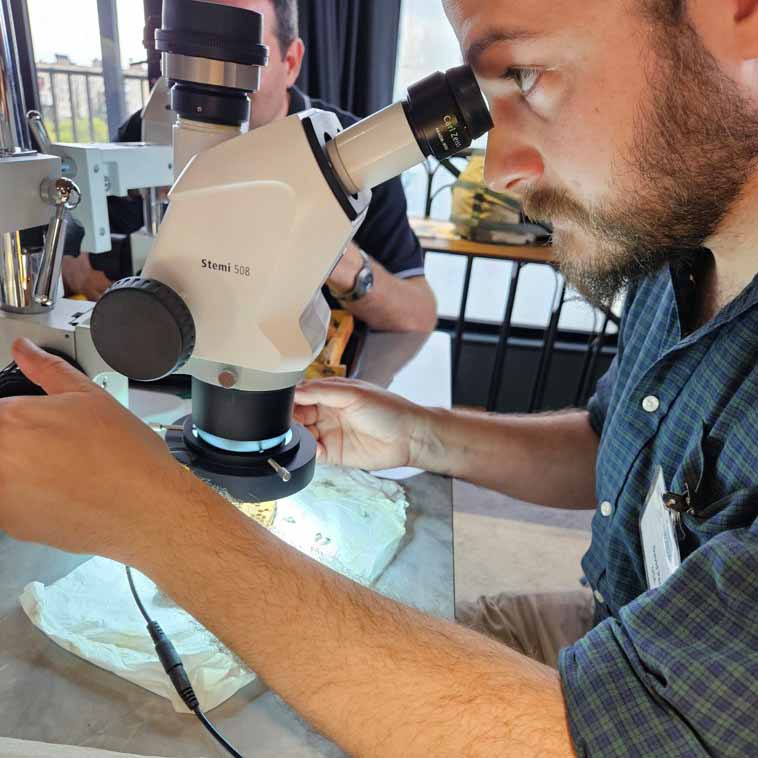
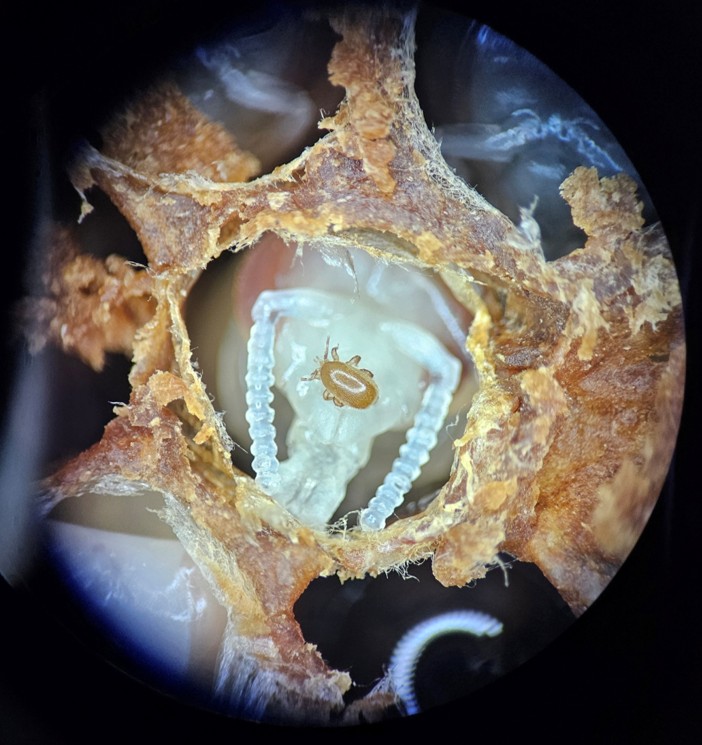
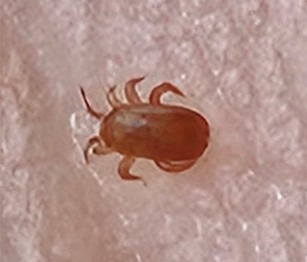
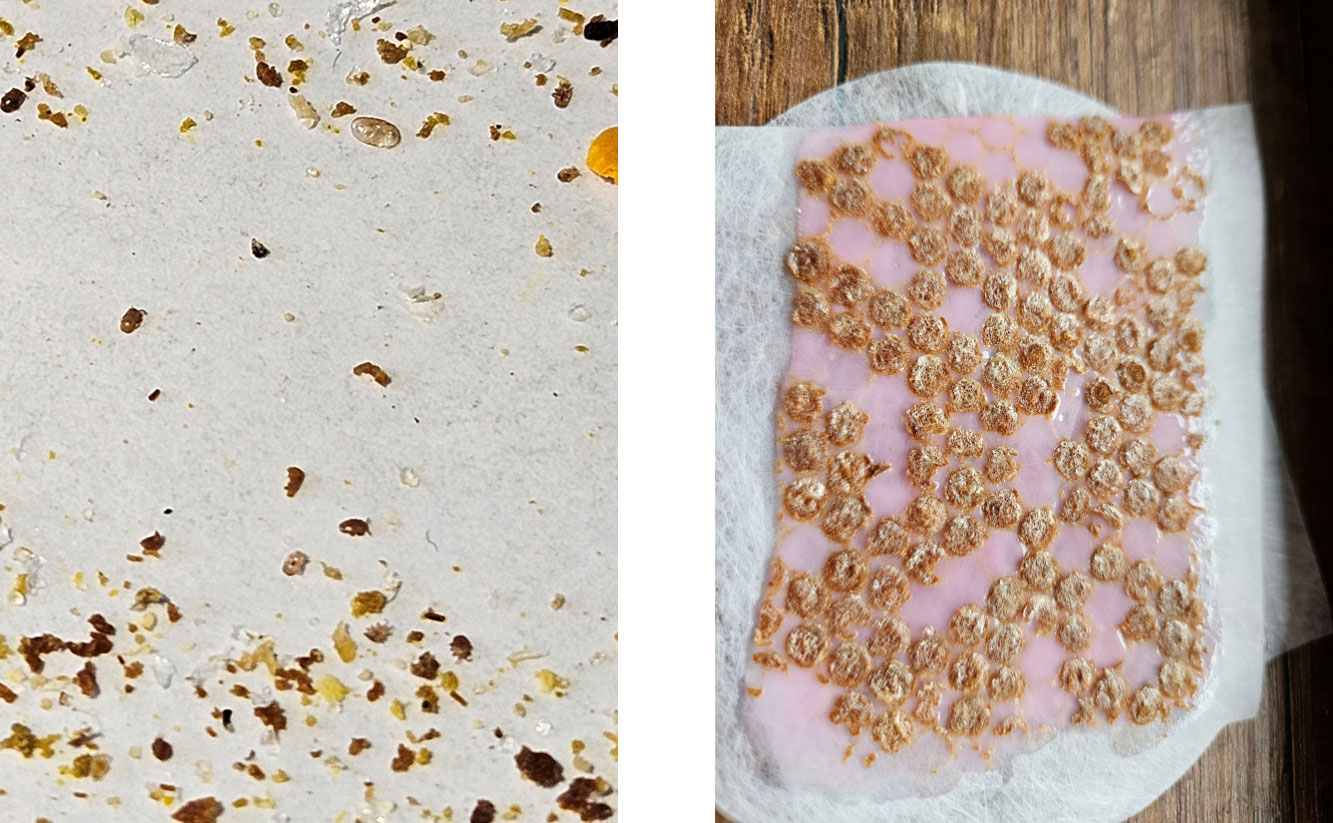
Microscopes allowed us to examine the mites up-close and personal, both dead mites in frozen combs and live mites collected from the hives. We discussed mite monitoring using both sticky boards under screened bottom boards as well as removing a section of brood caps using Veet body hair removal waxing strips, both of which offer pros and cons in trying to detect Tropilaelaps mites. Working together with international colleagues, we actually improved upon the existing state-of-the art monitoring technique, and a scientific manuscript has already been prepared to communicate those innovations.
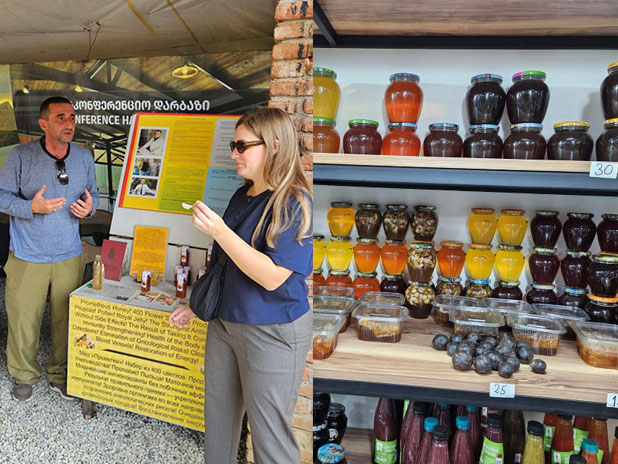
It was also a pleasure to travel to the other side of the world, to taste the local honey varietals and to meet the beekeepers who call Georgia their home. Every store seemed to sell propolis, pollen, comb honey, and jarred varietal honey from the many distinct nectar flows that the region experiences.
Dealing with Tropilaelaps - What did I learn?
What should we do to prepare for this pest?
First, they are spreading rapidly and very effectively. They can sustain themselves in warmer climates more easily than colder ones, but they can persist in cold climates as well. They are likely to spread throughout eastern Europe in the coming years, and then could spread further and further. There is no reason to expect they will arrive in the United States next year, but there’s no compelling reason that they couldn’t get here either. A ship headed for a port in New Jersey documented a swarm of Apis dorsata with Tropilaelaps mites on them, but those mites were a thousand miles away from the shore when they were identified and euthanized in a freezer.
How do you deal with them?
Tropilaelaps mites depend upon brood to survive. They must feed on larvae or pupae every few days, and can’t feed on adult bees. Therefore, if you can create a brood break in your hive, you can starve the mites out.
-This means that natural brood breaks in winter may help beekeepers in cooler climates, as long as the brood breaks are complete. (If you’d like to contribute to research on natural brood breaks in winter, click here )
-But natural brood breaks aren’t enough. Beekeepers in Georgia find that they need to use queen caging techniques to learn more about them. Betterbee is proud to offer a brand new book all about queen caging and other “Biotechnical” methods of mite control, which will help beekeepers understand this chemical-free practice of managing mites. [Link to biotechnical methods book] These techniques can be used to manage varroa mites now, and then applied with slight modifications to manage Tropilaelaps if they ever become established in the United States. One exciting tool to help achieve brood breaks is the Izovar cage, designed for long-term queen caging.
-Formic acid, including Formic Pro (that is already registered in the United States to kill varroa mites) can also be a useful part of Tropilaelaps control. The formic acid can kill mites inside and outside of capped cells, and also helps to create a brood break by stopping the queen from laying and killing off some sensitive bee larvae. This means developing expertise in using Formic Pro to kill varroa in your hives right now will help you prepare for Tropilaelaps if (or when) they arrive in our apiaries.
I was honored to have been invited to the SWARM 2026 conference, and I thank Betterbee for sending me there. I strongly encourage anyone interested in learning more about Tropilaelaps mites to get a copy of Tropilaelaps: At the Gate of Your Apiary and learn from the expertise that has been developed in Georgia and elsewhere to manage these devastating pests.
