During the latter part of winter, it’s the most likely time for bees to starve. Brood rearing began weeks ago, and activity inside the hive means their honey is being gobbled up faster and faster. How can we help them — and do they even need our help? Which feeding metho
ds are appropriate, and which could cause real trouble if we don't use them properly? Explore this guide to emergency and supplemental bee feed to determine how and when to offer solid food, syrup or pollen patties.
When to provide supplemental bee feed
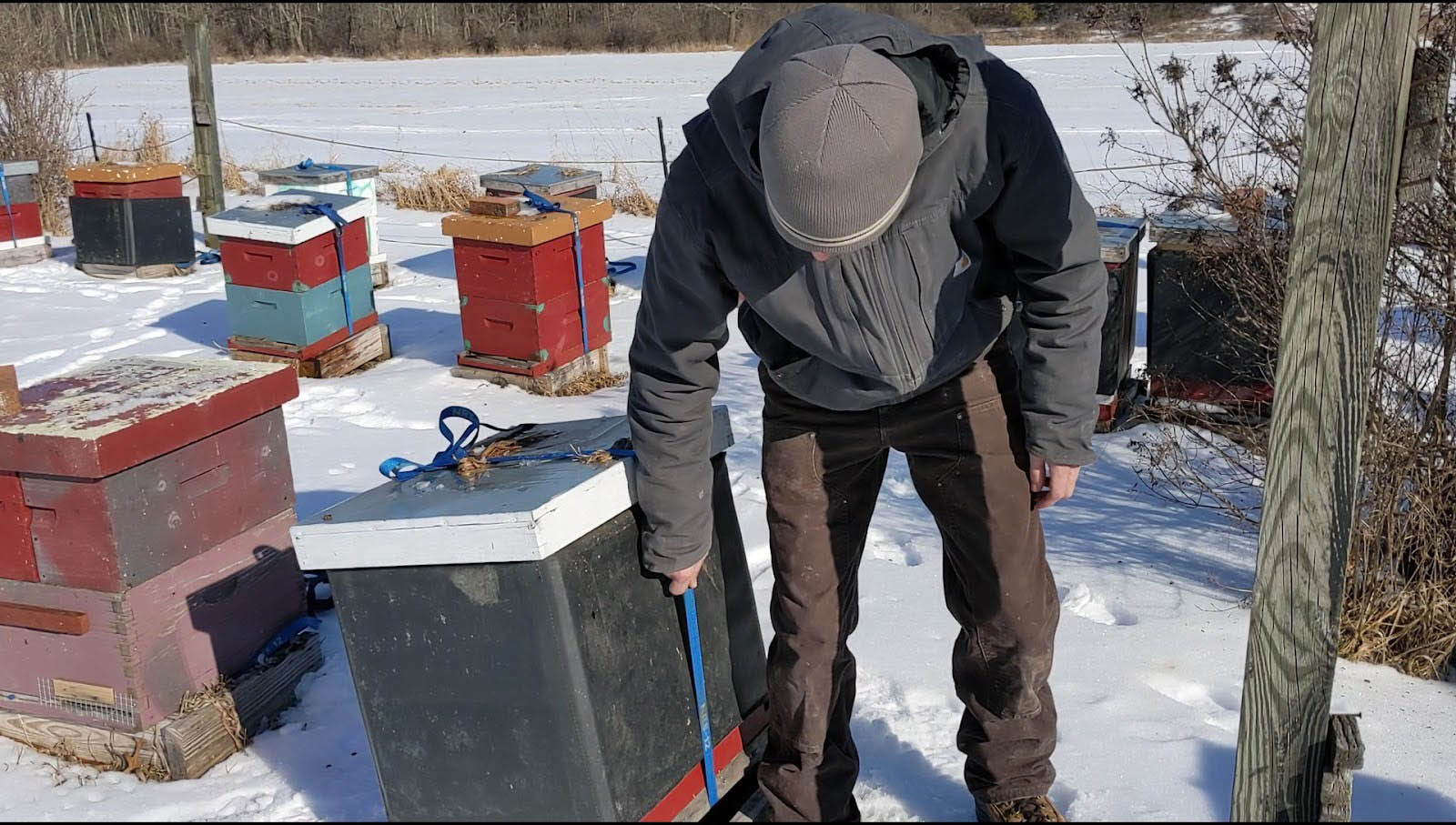
First, take a moment and ask yourself if the bees really NEED any food. One way to gauge how much honey bees have is to lift one side of the hive. If it feels similar to a stack of new, empty equipment: it’s too light! Get in the habit of hefting your colonies all year to get used to the feel of different weights.
The need to feed in winter is usually a sign that something has gone wrong — that your colony has burned through more honey than expected before spring.
Many beekeepers regularly have to offer late winter or early spring feed, but remember that doing so is a sign that you and the bees should have done a better job loading up the combs the previous fall.
If you want to learn more about offering emergency winter feed, check out this video from our Betterbee YouTube channel.
In the North, you can give bees combs of honey, white sugar, fondantor WinterPatties as emergency winter feed. The easiest winter feed is frames of honey — the food your bees are built to eat all winter. If you have heavy honey frames ( e.g. from another colony that died), insert them near the edge of the bee cluster on a relatively warm day. Even easier than adding a few frames is adding a box of frames. Boom, food. If you’re hesitant to open a hive in winter, remember, you are the steward of your bees. A brief burst of cold air will hurt them less than starvation.
Important: Don't offer your bees store-bought honey, which can carry the long-lasting spores of the bacteria that cause American Foulbrood. Bees in your apiary should never be fed honey made by colonies in someone else's apiary because you can’t know if the other apiary is free of disease.
If honey frames aren’t available, offer your bees supplemental sugar in other ways. The methods below rely on the same basic principle: Honey bee colonies tend to eat their way upwards during winter, and by placing sugar-rich food on top of the frames holding the bee cluster, the cluster will soon creep upwards into contact with the emergency food. For any solid emergency feed, a shim or empty super will be needed to give the necessary clearance to surround the pile. Consider weights when you decide how much to feed. One deep frame of honey weighs about seven pounds. Giving the bees about that amount of emergency food at one time is more useful than giving them just a pound, then opening the hive to add a pound, again and again.
Using winter patties or fondant for bees
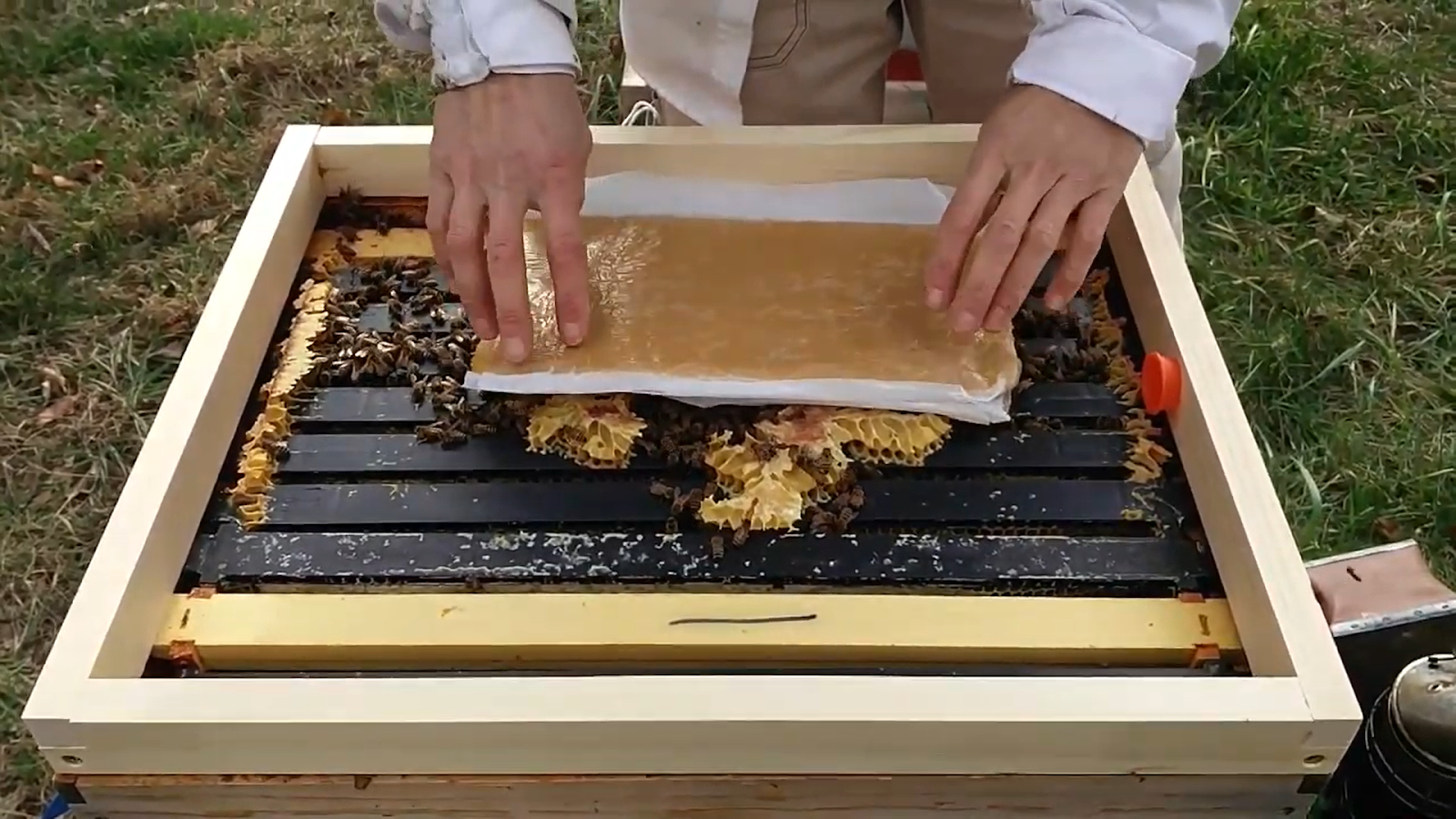
Betterbee carries two pre-formulated products: HiveAlive fondant and winter patties. HiveAlive fondant comes in a plastic wrap that must be cut away on one side so bees can access the feed. If you want to add many pounds at once, remove all the plastic. Winter patties (not to be confused with "pollen patties," described below) We recommend putting 4 to 10 patties (with the paper wraps left in place) right on the top bars above the clustered bees. Check back in 2-3 weeks to see if they need more. Until they can fly out and collect nectar, they need some food.
Homemade solid bee feeds
You can prepare other solid emergency bee foodyourself. The easiest DIY approach is to place a sheet of newspaper or tissue paper on the top bars above your bees, set a shim or empty super on the paper, then pour 5 pounds of granulated white sugar on top of the paper. The moisture of the cluster will form a crust on the sugar pile, and the bees will slowly tear through the paper and eat the sugar.
This method is easy — but many beekeepers prefer different methods of sugar preparation.
Sugar bricks are simple to make using a 5 gallon pail and some empty supers or shims. The basic idea is to mix sugar and very little water, pack it densely into forms (such as hive shims), score it to make the smaller bricks, then allow it to dry.
Learn how to make sugar bricks in 2 days without a dehydrator with this video: Making Sugar Brick
Is sugar syrup suitable as emergency winter feed?
Liquid feed is not a good option for winter in the North but it is fine if your area has warm flight days at least once a week. The reason for this different advice is that when bees consume a lot of liquid, they need to defecate. If your bees are clustered for weeks or months as they are in the North, their guts will become sick or they may poop all over the frames. Also, bees huddled together in a winter cluster won't move from the cluster to drink from a syrup feeder.
No syrup unless bees can break cluster and take flights!
When to feed bees pollen patties
What about offering protein or pollen patties (also called Global patties)? Remember that emergency winter feeding is all about preventing starvation, and pollen is not really food for adult bees — it’s best for the developing larval bees that will form the future workforce.
Pollen patties are a protein supplement that helps colonies grow lots and lots of young bees, but many beekeepers don't actually want giant colonies right as spring arrives. Colonies that get large very quickly in spring are primed to swarm, and drastic swarm-prevention methods may be needed to keep a huge colony from swarming.
If you plan to make nucs or splits from your colonies, you might give supplemental "pollen" as early as 3 weeks before the first natural pollen becomes available in your region. However, if you're not planning to make splits or nucs in the spring, feeding supplemental protein may be a recipe for unwanted swarms a month or two later.
So, to recap: If you peek inside the inner cover and see bees, or lift your hive and detect little to no heavy honey, you can offer your bees stored or salvaged frames of your own honey. If you don't have spare honey frames, offer dry sugar in the form of sugar bricks or granulated sugar poured onto newspaper just above the cluster on the frames. If you’d prefer not to offer dry sugar, consider winter patties or fondant instead — but don’t offer sugar syrup in the North until the bees have good flight days. Only feed protein if you know for sure that you want your bees making lots and lots of brood, producing booming (and swarm-prone) populations in the spring. And, if you choose to start feeding protein, it's your job to continue feeding it until your bees can meet their needs with the natural bounty of nearby flowers.
Additional Resources
Browser Compatibility Warning
The browser you are using is not supported on this site. You may experience issues with some features on the site. It is recommended that you use one of the following browsers - Chrome, Edge, Firefox, or Safari.