Beekeeping with Children
By Elizabeth Warner - Betterbee Sales & Community Engagement Manager, Educator, and Beekeeper 2026
Beekeeping with Young Children and Student Groups
As you become more comfortable around your bees, you may want to ask others into your apiary to share in the joy and wonder of beekeeping. Don't limit your invitations to adults only. This might surprise some of our readers, but it's true: Beekeeping can begin at any age! Individual children, like a family member or neighbor, can learn at various distances from the bees, and with different levels of involvement. If you're looking to bring more customers to your property, consider adding an agritourism element and welcoming family groups and youth organizations to your apiary. You can also help bring beekeeping into the classroom for teachers to satisfy mandated learning standards. No matter the age group, it will be your job as a teacher or guardian to "know your audience" and bring them into the activity to the level they can participate.
When Are Children Ready?
Each child develops at their own pace. You might have a three-year-old niece who is able to accompany you to remove VarroxSan strips, or you might have a 5th grade student who screams at the sight of any flying insect. Before bringing a child into your apiary, ask yourself these questions:
Can they keep a bee suit on for a period of time, even if it's hot, itchy, etc? Some children are particular about how clothing is worn, and they may feel compelled to remove their protective gear at the wrong time.
Are they able to be "gentle"? Young children often seek sensory input and might want to poke, squish, and shake things they shouldn't. This is all normal exploration, but it won?t lead to a great experience around a bee hive.
Cognitively, can they remember what to do if they get scared? Having an exit strategy is important, but it won't do any good if your apiary guests can't remember it in their moment of panic.
Are you ready? Remember, all of your apiary visitors will look to you for reassurance. New beekeepers sometimes carry a significant amount of anxiety over getting stung, harming the colony, and knowing what to do next. If you are still nervous around your hives, your guests may sense your anxiety and block out any joy of the experience. Often, children cannot verbalize their fear, and you must be able to pick up on their body language to gauge the situation
Offer the introduction from a distance.
Knowledge is power! The more people know about honey bees, the less likely they will be fearful of them. Make a photo slide show of your open hives so your group can learn about the type of experience they will have when they get there. Encourage young children to draw pictures and make up stories about honey bees. For family groups, clearly communicate your property's access points and limitations ahead of time. Guardians love to have an understanding of any property before a visit with their children. Email them a map with important details like parking directions and bathroom availability. Even electric fence safety tips will help put a parent's mind at ease. Each state has their own laws about agritourism and mandated signage. Check with your state's Department of Agriculture for more information. For organized school groups, send ahead a learning packet so teachers can prep their students about expectations before visiting your bee yard. Include photos or videos of what they'll experience in-person.
Set yourself up for success.
To ensure optimal conditions, a thorough apiary check should be performed before each visit. Make sure the hives you'll be opening aren't queenless. Bees can also be extra defensive if the hive has been recently disturbed by a bear, skunk, or clumsy beekeeper.
Try to schedule the visit during the heat of the day when most of the foragers are out. If this isn't possible, book the visit during generally nice weather. Bees tend to remain around their hive and become defensive when they sense a drop in barometric pressure.
Be equipped with the right protective gear for all. For adults visiting Betterbee apiaries, we require a minimum of a
veil. Minors should be covered completely with a beekeeping veil and
suit with
gloves. Alternatively, a
jacket or
packable pullover and long pants could work, too. With young children, practice wearing everything in the house first, or dress a favorite teddy bear in a
toy beekeeping suit who can join you in the apiary later.
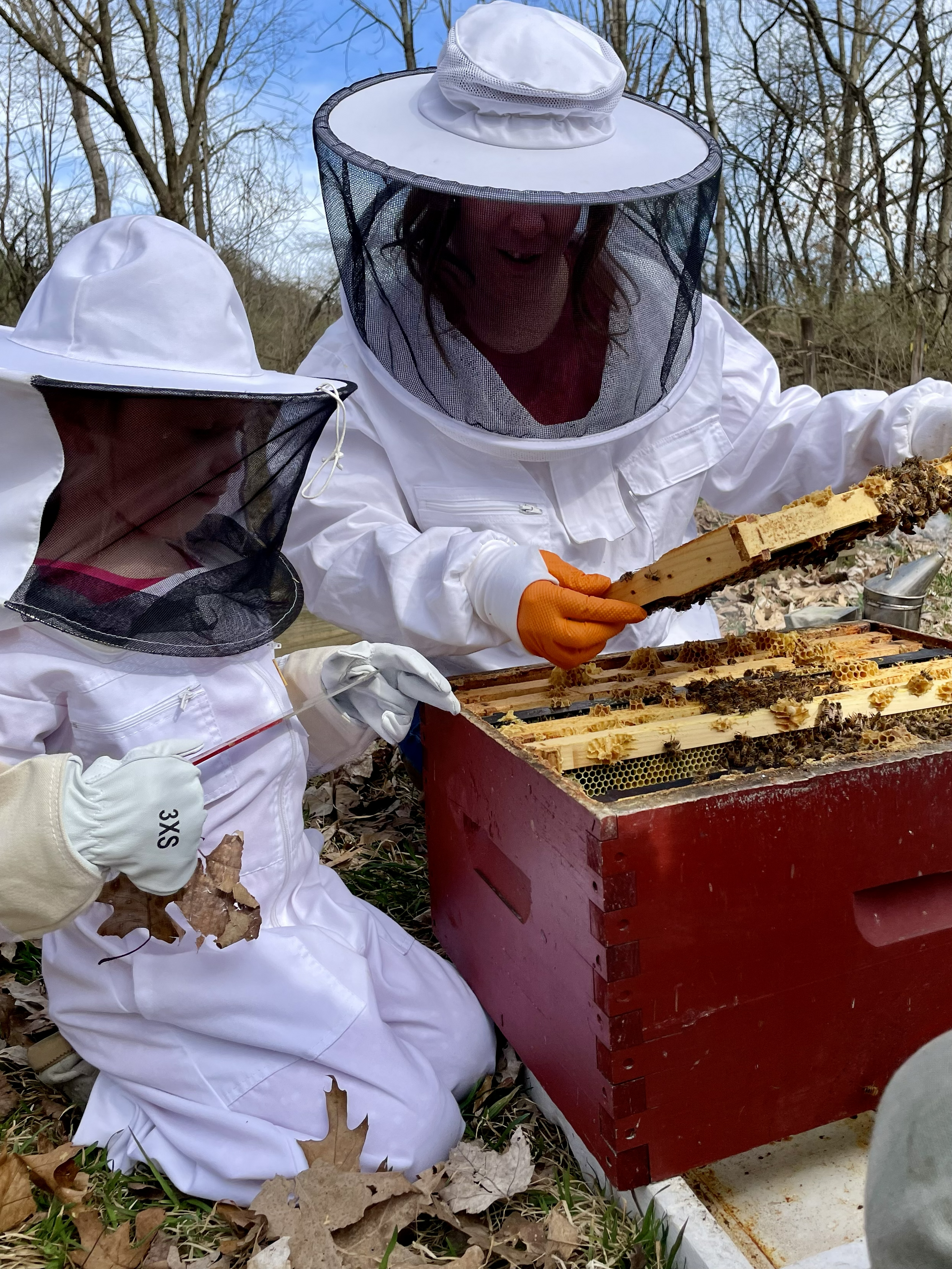
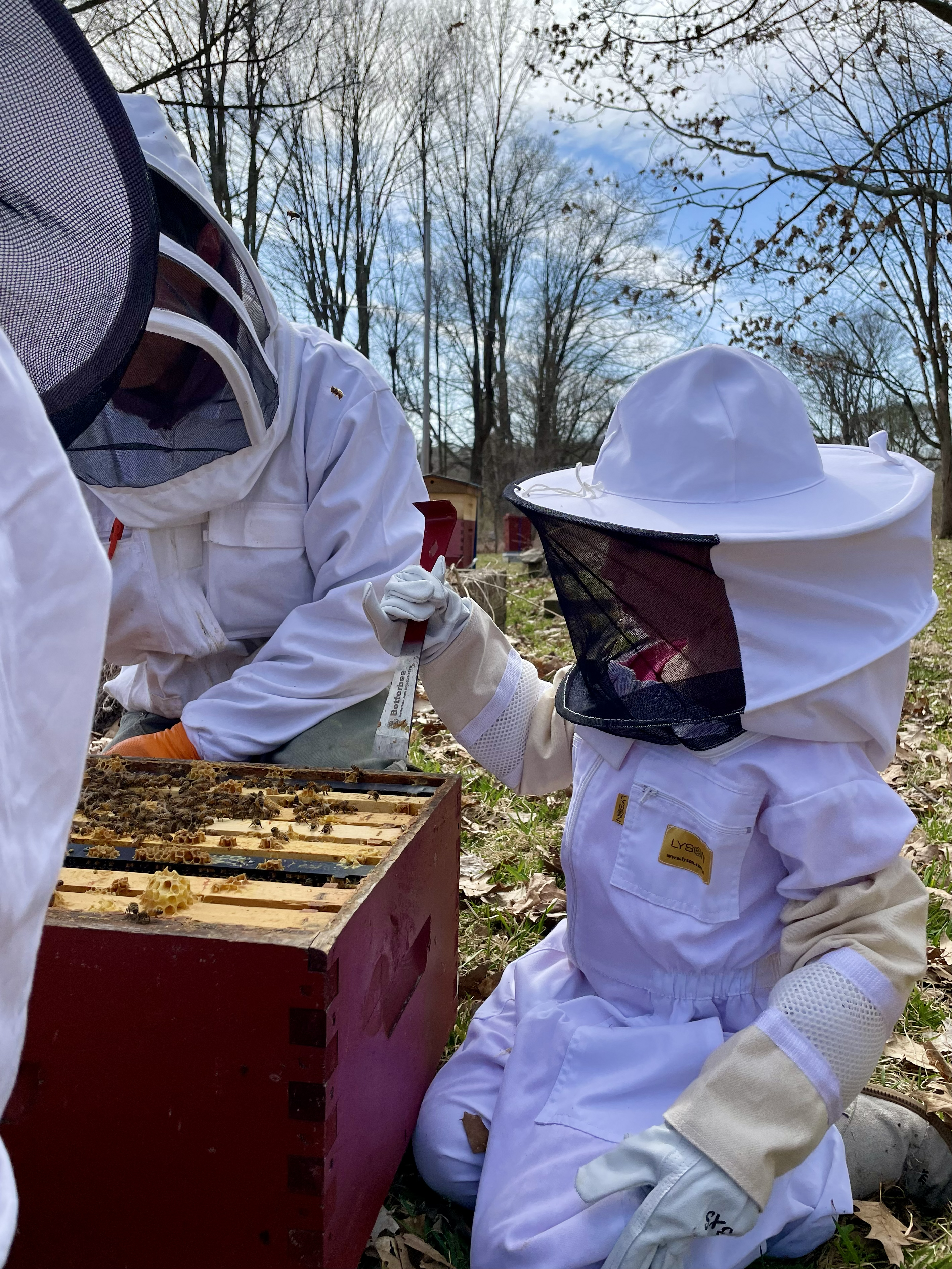
If it's hard to tell whether a child is ready for the apiary, be prepared for a short visit, or let them watch from afar for the first few outings. Have a plan in place. Children love to know the order of operations and what their job will be out in the bee yard. Talk up the importance of their role, no matter how small. Older children can take notes in the observation journal. Younger children can help by holding your extra hive tool while you inspect the frames. Encourage them to participate as they feel comfortable. They can pass the right tools to you and keep the smoker smouldering by puffing it every once in a while. Watch their body language for signs of discomfort/alarm, and remember to prioritize the needs of the child over the bee colony.
Other Ways to Get Children Involved:
If it's clear that the child is not ready to enter the apiary because they're afraid of honey bees, try introducing them to other, non-stinging bugs first. Familiarize them with "safer" buzzing sounds, crawling sensations, and unpredictable flight patterns. Here are some other ideas to get children involved in beekeeping without working in the apiary:
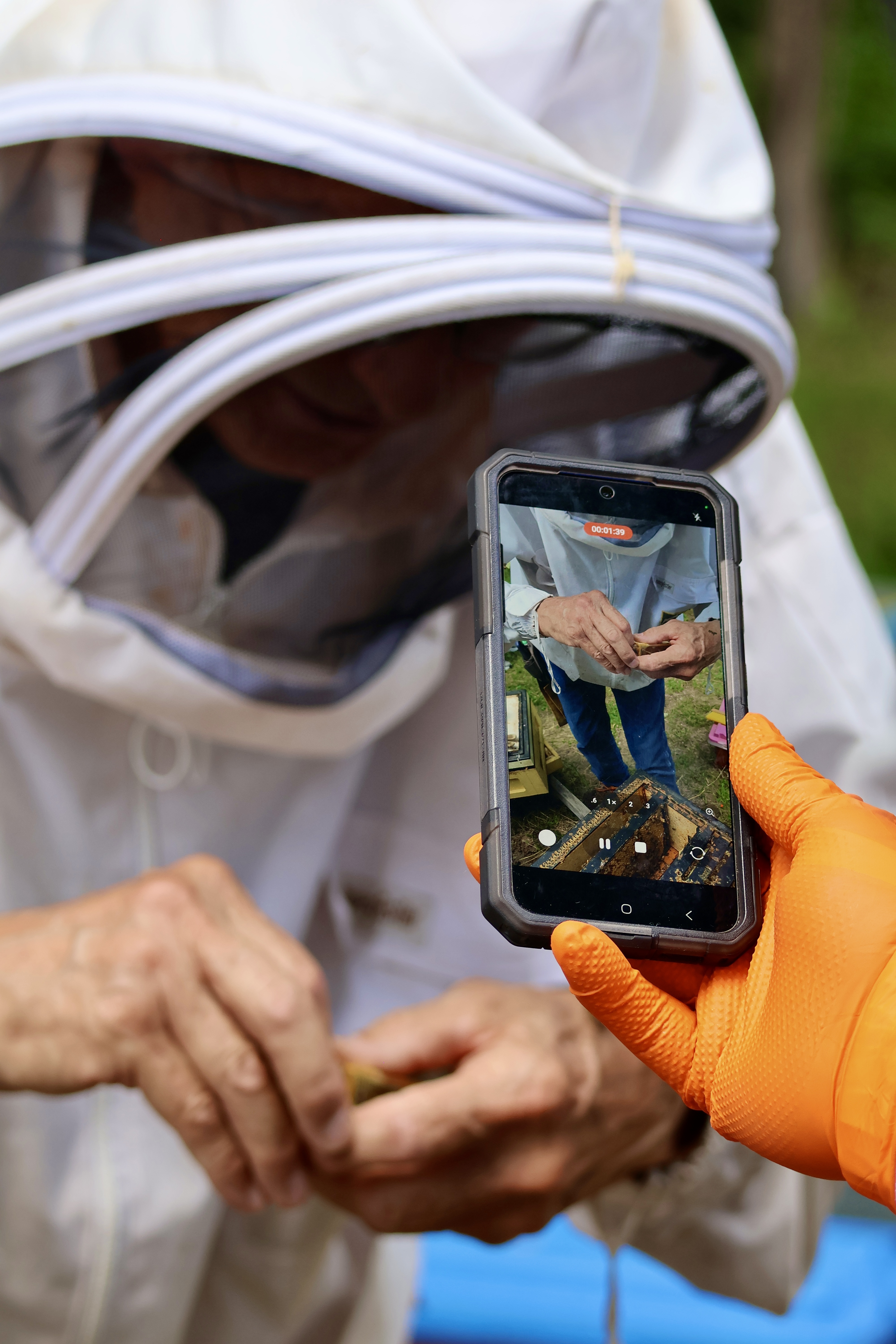
From afar, have the child hold the tablet or phone and take video/pictures of you while performing your hive inspection. Watch the footage that night together and talk about what you did that day.
Catch some drones, and bring them away from the hives for a sting-free hands-on experience of honey bees.
Bring the Varroa Monitor Tray in the house to play a mite-counting game.
Stick labels on the honey jars.
Hand crank the extractor.
Young children learn best through play. Use a toy hive and act out beekeeping activities with stuffed animals.
Older students and family groups can learn by watching honey bees inside an observation hive.
Sometimes, field trip funding is based on relevance and learning outcomes. Beekeeping lessons can be used to help the brain develop across multiple domains. If a teacher approaches you about a field trip, let them know that beekeeping can help meet Common Core standards. Here is a simplified breakdown of each learning standard, and how honey bee lessons can teach each:
Math - There is all sorts of geometry to be learned with honey bees. From their wax cell structure to the idea of "bee space", students can measure and make all sorts of calculations with honey bee-related numbers.
Science - Bee biology is best seen under a microscope, but we have a great diagram on page 81 of our 2026 catalog. Please email us if you're interested in obtaining printouts.
Language and Literacy - Betterbee has a free glossary of terms that can be used for writing assignments and spelling bees.
Physical Development - Beekeeping is a highly physical activity. Students can learn how to lift heavy equipment gently, as well as how to manipulate frames with their fingertips.
Social-Emotional - Beekeeping teaches emotional regulation and empathy by creating a space where people may feel physically uncomfortable and must work closely together.
Art - Students can create observational drawings of bees and their favorite nectar sources. NOTE: Please teach with accuracy and avoid misconceptions of honey bees and the hives they live in. Too often, we see coloring pages depicting a beehive as a wasp nest or a bee with only two body parts. Betterbee staff-designed coloring pages can be requested for free by emailing us at support@betterbee.com.
Learning is for Everyone
At Betterbee, we believe that everyone belongs in the bee yard. We all have our own strengths and limitations, and we rely on our education team to teach us how to be good beekeepers. During these winter months, we spend time writing new lectures and lesson plans for all types of learners. If you're interested in a specific lesson plan for your student group but not sure where to start, we encourage you to reach out to us for ideas and collaboration.

