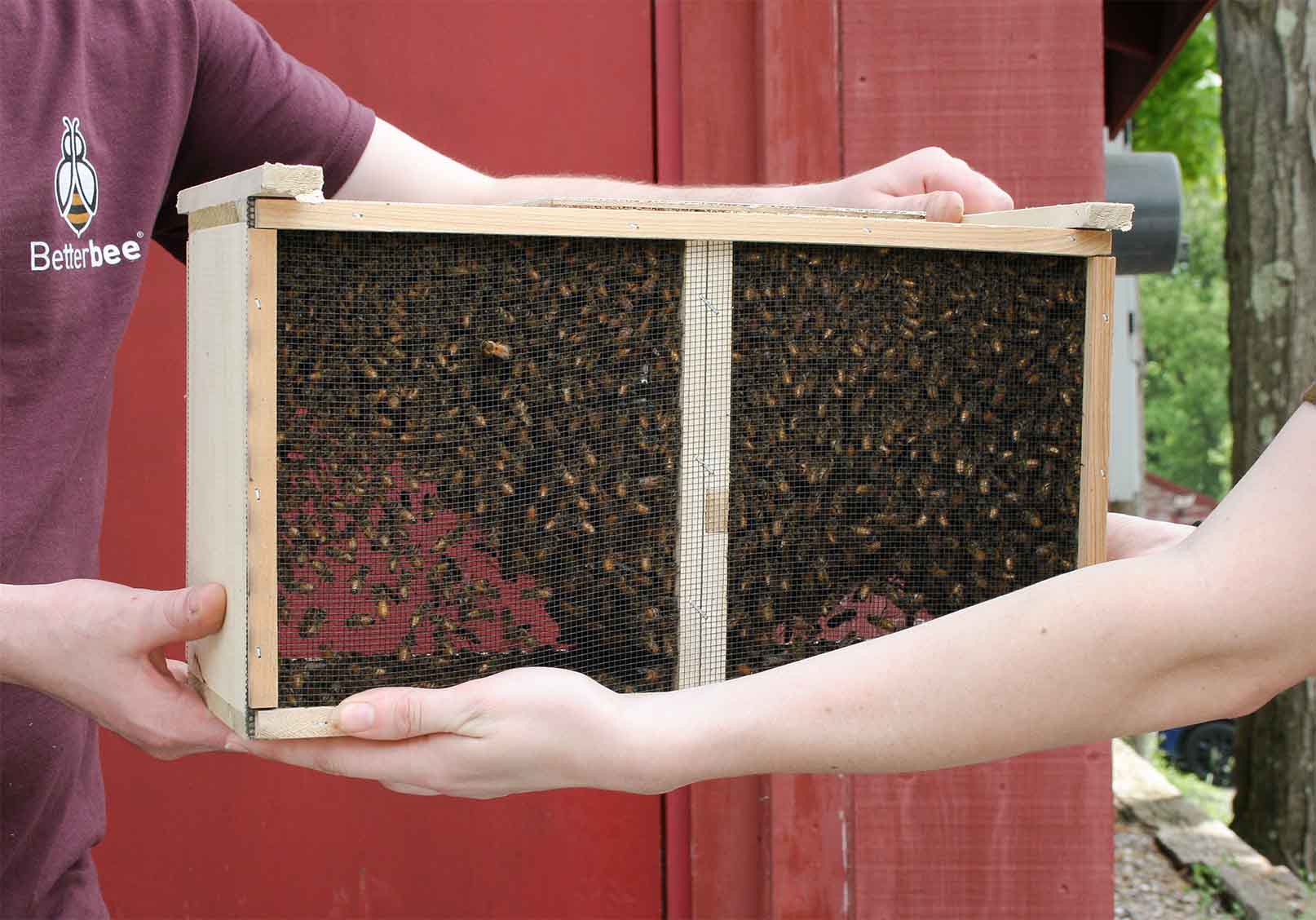
Why would I want to buy a package of bees from Betterbee?
We think nucs and packages are both great ways to buy bees. They're priced a little differently, they need slightly different care to get them started, but they both turn into strong colonies of bees. Unfortunately, we feel like beekeepers sometimes dismiss packages as being worse than nucs which we don't agree with. What's hurt the reputation of package bees? We think a lot of the problem comes from unscrupulous package sellers selling crummy packages of bees. Our packages do great, but that's because our packages are great. Here's why:
A trusted, long-term relationship with a 5th generation package producer
We are proud to buy our packages from Patrick Wilbanks, who currently runs the multi-generational Wilbanks Apiaries package bee business in Claxton, Georgia. Betterbee started buying packages from Patrick's father Reg, and we have been happy to work with Patrick since he took over as the 5th member of the Wilbanks family to lead their package bee operation. When we talk to Patrick about his bees, we're talking about drone development times and queen breeding, not how we can make another dollar selling more packages. It's a pleasure to work with a real beekeeper who really cares about the quality of the bees he sells.
High queen quality
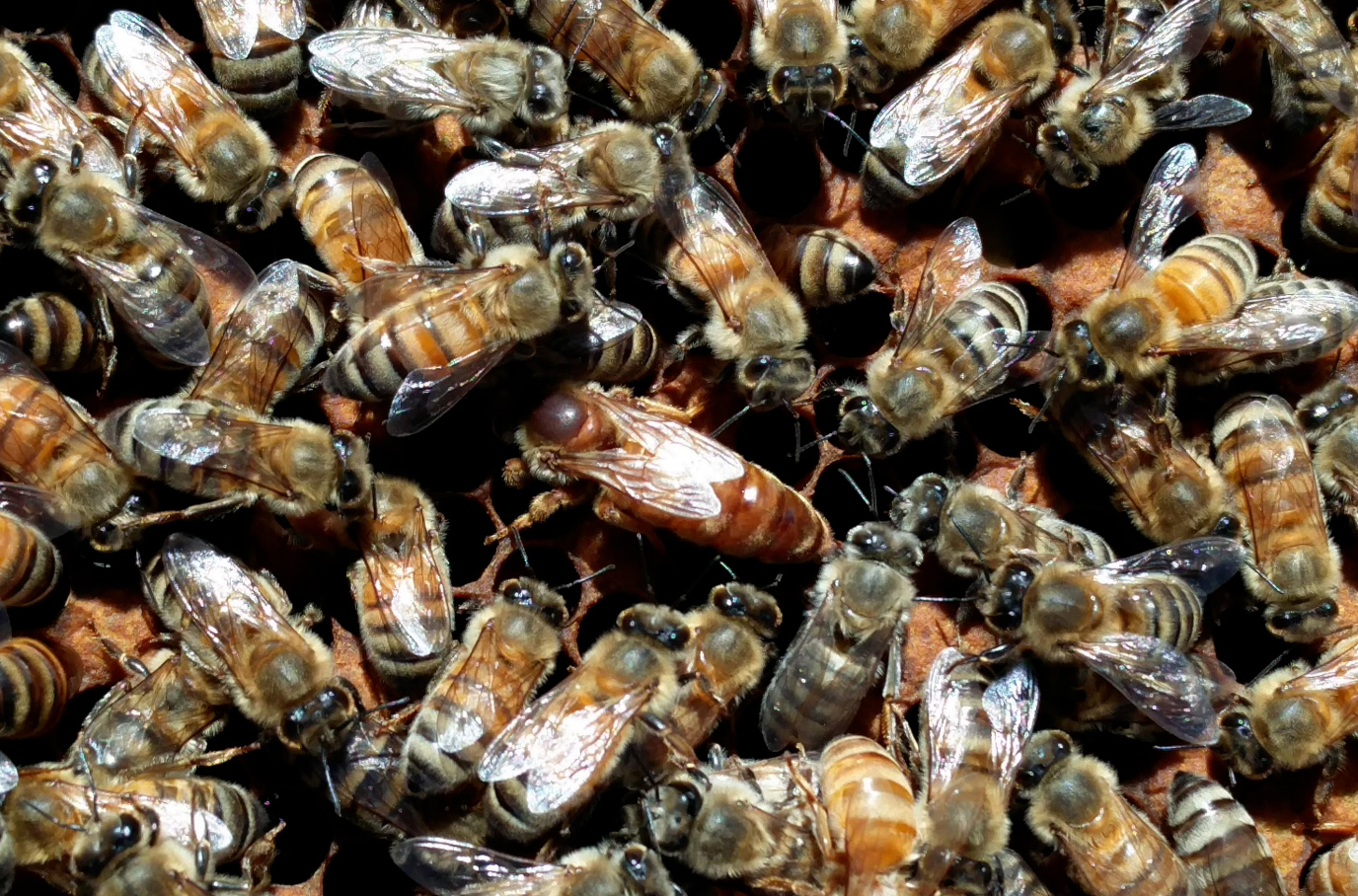
And boy, are those bees high quality. Wilbanks queens are regularly sent to Professor David Tarpy's lab at North Carolina State University. Dr. Tarpy's lab scores queens based on their anatomical quality, and uses both microscopy and genetic tools to evaluate how well mated the queens are. The queens from Wilbanks Apiaries consistently score top marks from this program, and what we see in the apiary agrees with those results.
Great genetics, featuring varroa-resistance
The queen in each package is the product of a breeding program that combines decades of queen breeding for the best Italian bee stock with the cutting-edge Pol-line of bees developed by USDA for high levels of varroa resistance. How resistant are the Pol-line bees? A 2022 paper in Scientific Reports showed that commercial bee colonies in Mississippi, California, North Dakota, and South Dakota all showed better survival with Pol-line queens compared to standard commercially produced queens. When the Pol-line queens and the standard queens were not treated for varroa, 62.5% of the Pol-line colonies survived the winter, and 3% of the standard queens survived. When the colonies were treated for varroa, 72 percent of the Pol-line colonies survived and 56 percent of the treated standard colonies survived. The Wilbanks breeding program has been incorporating the Pol-line bees into their queen production, producing great bees with great genetics. And what about those Italian genetics? Some people criticize the Italian race of bees compared to other stocks. In many ways, Italian honey bees are the standard and stock honey bee for most beekeeping in the U.S. They're gentle bees that produce large crops of honey. Most queen breeding programs started with a base of Italian honey bees, adding genetics from other lines or selecting for particular genes they wanted.
Why start with Italians? Because Italian honey bees are great bees! They grow quickly in the spring, as soon as the weather starts to warm up. They grow all through the year, maintaining a large field force that is ready to make huge crops of honey off of major nectar flows from different flowers. The downside to Italian bees, if there is one, is that they can sometimes grow themselves into trouble. If your area experiences a long and severe nectar dearth, a large Italian colony can eat their way through their stored honey before the next nectar flow comes. In these cases, you just need to feed the Italian bees a bit of syrup to get them through the lean times, and they'll reward you with a tremendous foraging force that might make a record-breaking honey crop when the next nectar flow begins. Because of how queens mate, most lineages of bees in the U.S. aren't "pure" Italian, or "pure" Russian, or "pure" anything. But the Wilbanks Apiaries team has done a great job of combining the best available traits in the Pol-line and their longstanding Italian honey bee stock to make a marvelous honey bee.
Purpose-raised package bees
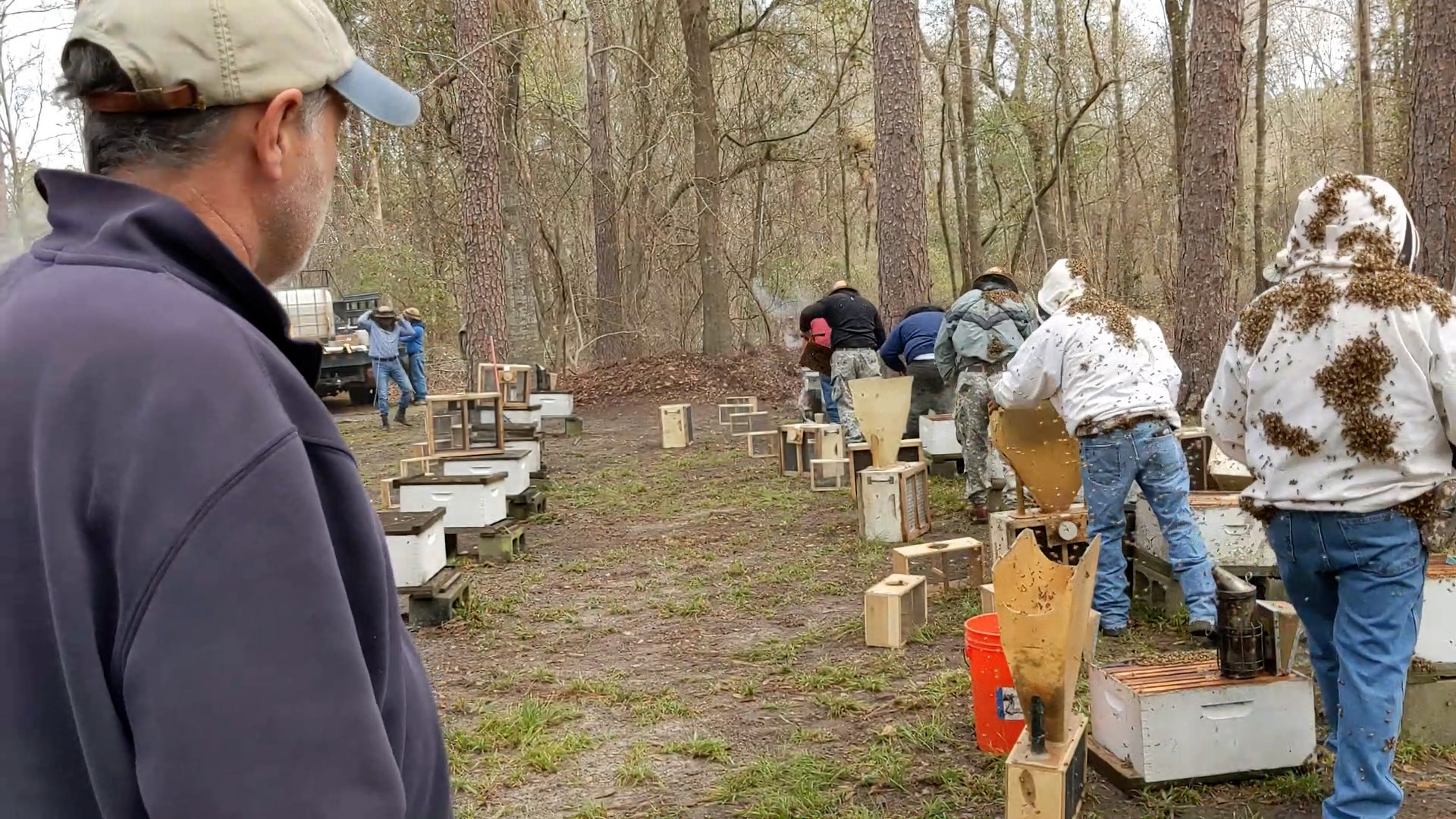
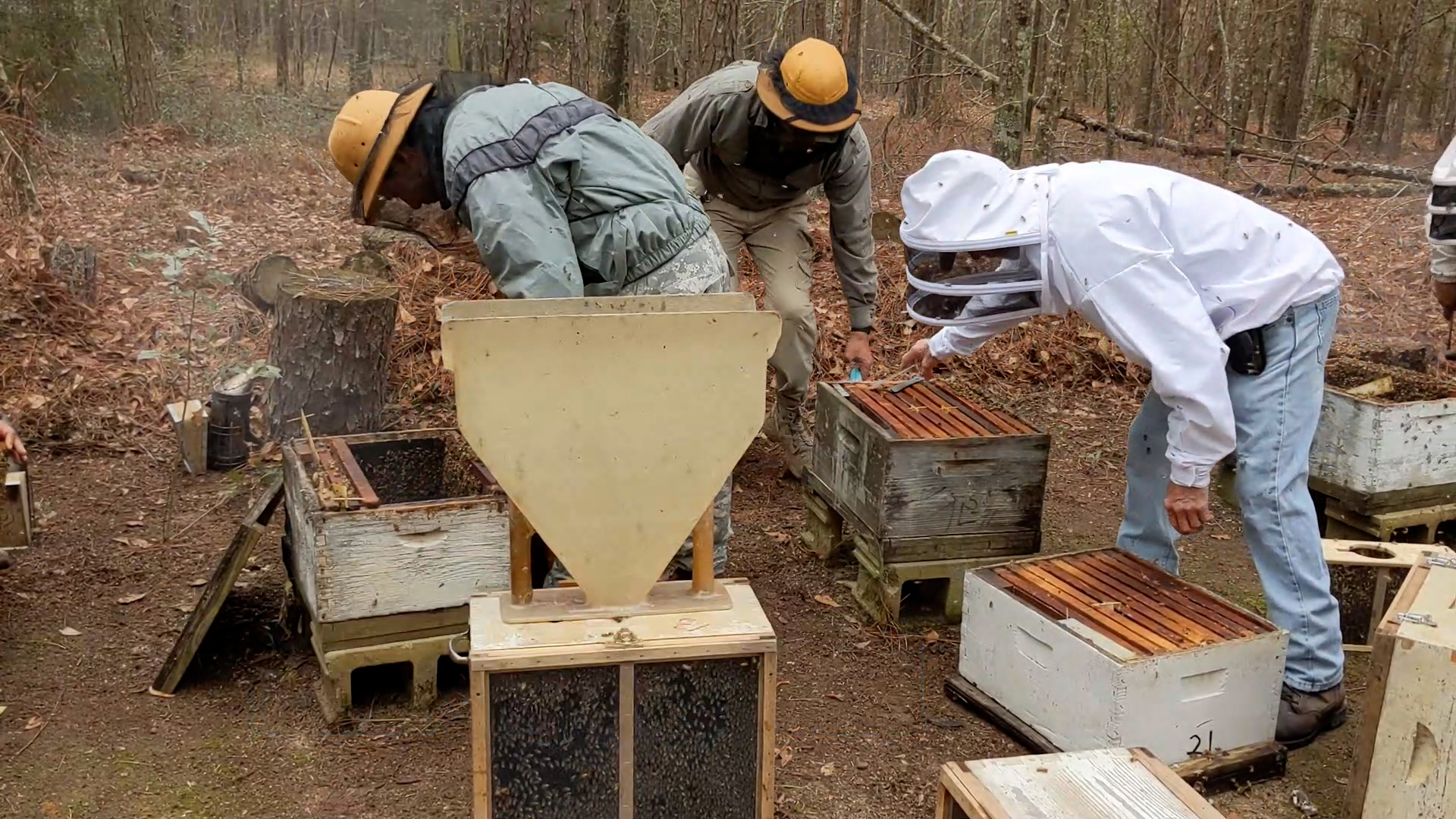
The bees in our packages are taken from big colonies that have been managed and fed to make lots and lots and lots of bees. They're removed from the source colonies when the majority of the bees are the right age to form a healthy package. How are some other packages made? Well, in some places the majority of the packages are made by shaking the leftovers out of the colonies that just finished fulfilling pollination contracts in the California almond orchards. The bees are trucked over the Rockies in February, left to forage in fields that may or may not contain pesticide and fungicide residues, and then shaken into packages with a queen stuffed into them. Many packages in the Western U.S. are made this way, as are many of the packages that are mailed to beekeepers all over the country. But we know that truckloads of California packages are even being delivered straight to bee suppliers in New England, so you can't assume where your packages are coming from - you need to ask your supplier directly. We're proud that the bees we sell are born to be package bees, not just the leftovers from commercial almond pollination.
Lightning-fast transport up from Georgia
The packages we sell are loaded into a high-tech, highly engineered travel trailer full of temperature and humidity sensors. The truck is beaming data back to the mothership at all times, and the drivers can adjust fan speeds and ventilation to make sure the packages stay nice and cool on their trip up from Georgia. Every year, they tell us when they think the driver will arrive, and every year the driver arrives a little earlier than the estimate. They could only get here from Georgia if we could teleport them. That means the bees are subjected to the lowest possible transport stress.
No bees delivered right to your door!
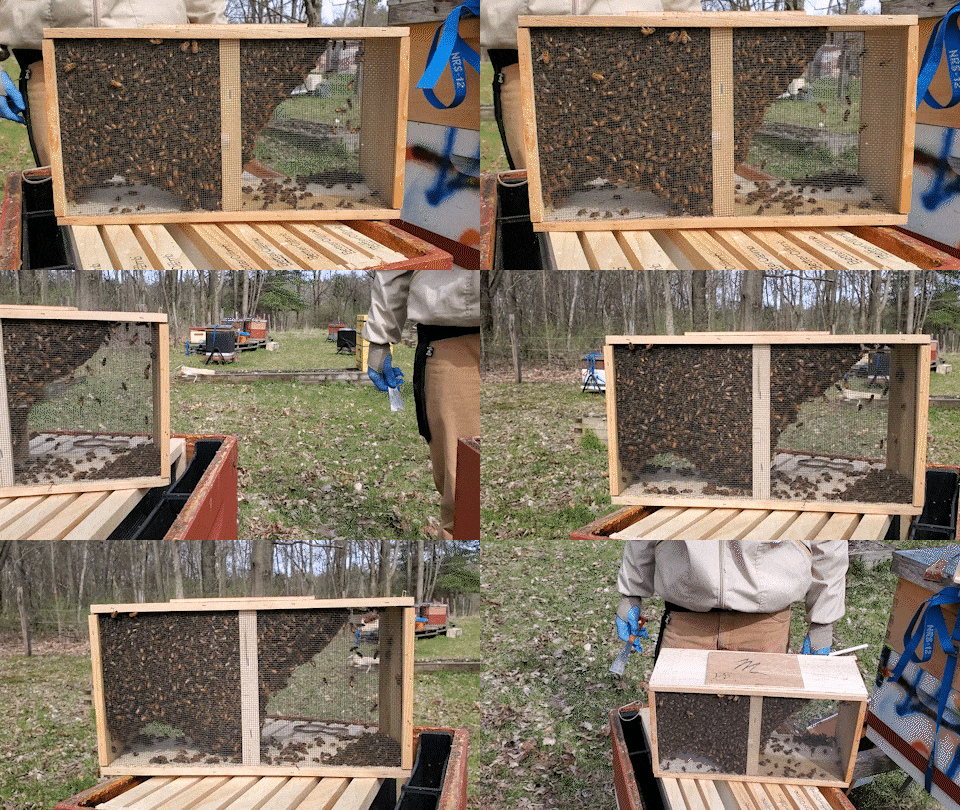
It would be nice if we could arrange to have a healthy package of bees delivered right to your door, wouldn't it? Well we can't. And we're not sure that other companies can really ship you a healthy package either. They'll ship you a package, but when they arrive you'll be able to tell that they've been stressed and abused during their journey. Every year there are news stories about entire truckloads of bee packages that were left over a weekend and all died. A few years ago, a beekeeper sent her husband to pick up her packages from us. "Wow!" he said "These bees look great! I work at the post office and you should see the inch or two of dead bees that we see in the packages that go through the mail." We don't measure dead bees at the bottom of our packages in inches, we can just count the few individual bees who expire. We refuse to abuse bees like that. We'll be happy to see you when you drive here to our Greenwich NY location and pick up your bees in-person, and we'll give you instructions and guidance on how to make their transition from the package cage to your hive as quickly and easily as possible.
Those are just some of the things that we think make Wilbanks packages from Betterbee pretty darn special. Of course, that's in addition to the other advantages that ALL packages of bees have, no matter where they came from:
Newly mated queens in packages are ready to lay lots of eggs, and aren't inclined to swarm in their first spring.
Package bees are less stressed during transport, because a package is a simulated swarm of bees. They just wait calmly and eat syrup while they wait for the "swarm" to choose a new home. Compare that to nucs - small colonies of bees who have no idea they're about to be closed up and transported many miles away from home!
It's often easier for new beekeepers to work with packages compared to nucs, since the bees are more inclined to make new wax comb after spending some time a "swarm", and they grow at a moderate pace that keeps them from getting too big to handle too fast.
There's a lower starting disease load in a package, since bee diseases that shelter in comb or brood won't have an easy path to get into your new hive. Disease can still spread in any situation, of course, but packages are generally safer.
So why should you buy a package of bees from Betterbee? Because we trust that you're going to get a great colony of bees that will serve you well.
Browser Compatibility Warning
The browser you are using is not supported on this site. You may experience issues with some features on the site. It is recommended that you use one of the following browsers - Chrome, Edge, Firefox, or Safari.