by Elizabeth Warner - 2026
In June 2026, the USDA published an article summarizing the 2025 U.S. data on honey production, consumption, and importation. Warning: This report can dishearten American beekeepers and lovers of local honey, alike! The bottom line is that US honey production is down while demand is climbing, and the market is balancing the deficit by importing even more honey from outside the US. According to the article, 82% of honey used in the US last year was imported from other countries. As beekeepers with honey surpluses, we must take this as a call to action (and see it as an opportunity to make some money!) Despite any closeby competition, all beekeepers can capitalize on the power of the local market. As "buying local" becomes more and more popular, your local honey is a prime candidate for the local shopper's cart. Selling your honey is achievable with a little bit of planning, creativity, and confidence. The good news is that, unlike seasonal produce that eventually spoils, honey can stay fresh all year round and can therefore always be "in season." In this article, we'll go over all the different ways you can start selling your honey locally, and we'll share everything we do at Betterbee to sell our honey. No secrets here! We want you to be successful. 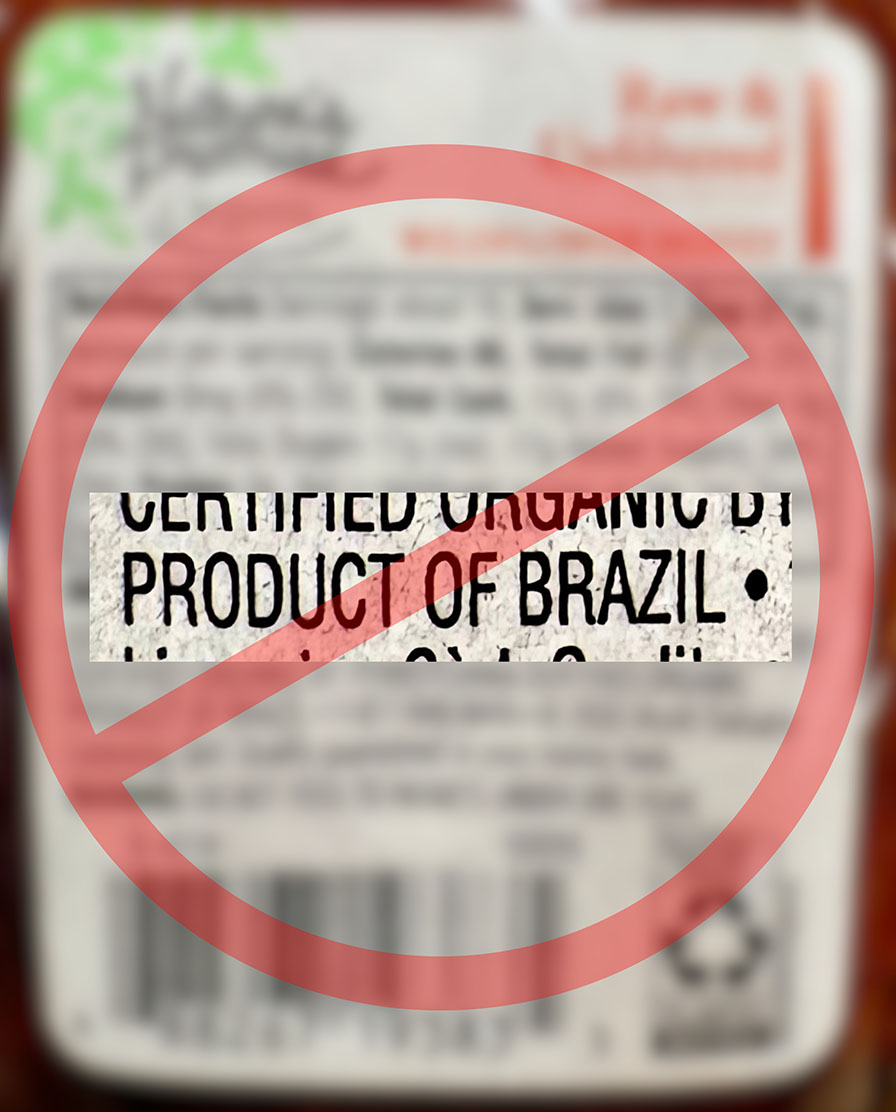
Mike Strohmeyer's Honey on grocery store shelf
The first two big steps to be taken will be to choose your scale and decide your pricing structure. In order to price your honey to make a profit, you need to understand your costs. There is a lot of math that goes into determining your cost of goods sold (COGS). For hobby beekeepers, it can be a challenge to calculate general operating costs + materials + labor. It's a valuable spreadsheet if you're into that sort of thing; Or, you can scope out your competition, see what the prices are generally set at, and make a choice. No need to overthink it initially. You can always tweak prices as you learn more about the market. Be sure to make the appropriate comparisons. Glass jars of honey will sell at a higher price than plastic bottles. Add-ons of mini honey dippers or cute themed keychains around the lid will also raise the price tag. Strive to set your prices to what the market can withstand. For example, you might be able to set a higher price if you're the only beekeeper in your area offering a certain type or infused flavor of honey. Conversely, you may need to lower your price to be competitive with the two other honey suppliers at the craft fair. If you're just starting out, it's important to understand the value of getting your product into the hands of your potential future customers. Do you keep your prices higher but offer lots of free samples? Do you create an event-specific sale to entice more buyers? Be ready to take a bit of a hit and consider it a marketing expense. At Betterbee, offering free samples and special discounts are part of a larger marketing strategy, and we'll share our honey prices in the corresponding sections below.
Bulk Sales
There's nothing sweeter than partnering with a local restaurant, bakery, or brewery to move your product out the door and make some fast cash. Much of Betterbee's honey is sold in 60lb buckets to resellers and breweries. After extraction, we gravity feed our Betterbee honey from a settling tank to a 5 gallon bucket through a filter cone. Despite the extra large container size, the product still requires a label. We use a large rectangle custom label so the information is clear, and it's a well-designed. 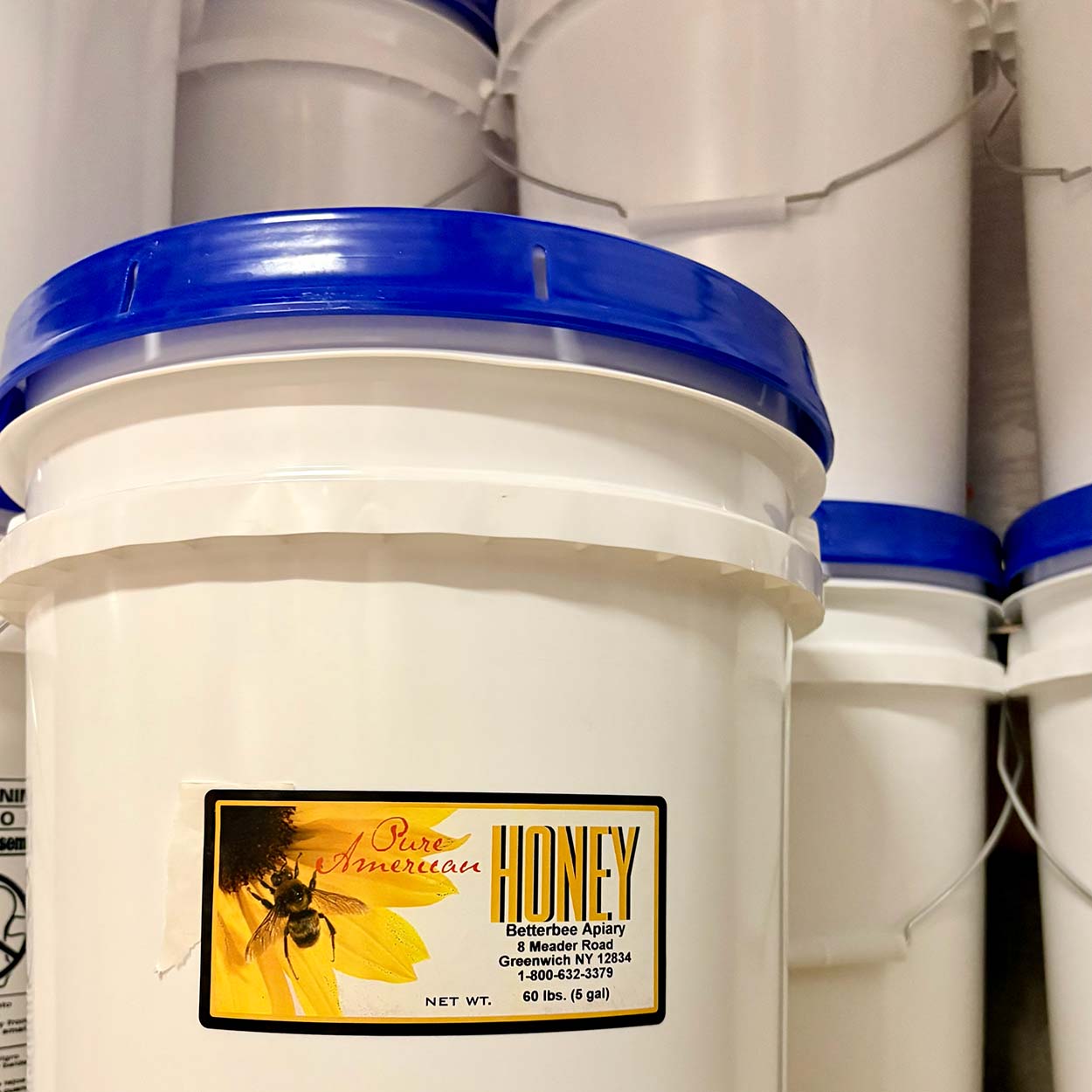
Betterbee's bulk honey
Pros - We like to sell our honey this way because it keeps our costs down. Less money is spent on containers and labels. Less time is spent on bottling, sealing, and stickering, which means labor can be redirected to other important tasks. We have enough inventory to meet demand, and it's a low-effort model we can rely on.
Cons - You're going to make less money per pound. Sixty pounds of honey might sell for $5-$6 per pound, whereas a single 16-ounce bottle could be worth twice or three times that much. There will probably be less brand recognition because your honey will become a single ingredient in a new item instead of a stand-alone product. Depending on how many hives you have, it might be a challenge to meet the demand on a regular basis.
How to start - Local business loves to support local business, and you're likely to find a receptive owner if you drop in to any establishment with a free sample and your pitch ready. Leave a branded, single page document with your information, pricing, and personalized message for their consideration. Frequently, businesses operate without a storefront. Ask around to find local mead makers or cottage kitchen bakers that operate out of their homes. Collect as many leads as possible, and understand it may take time to reach a decision. Consider offering to sell a smaller quantity (10-20 pounds) for initial testing.
Roadside Stand
It doesn't get more local than your own front yard! Betterbee does not run a roadside stand, but we have a bunch of customers who do, and many have operated theirs with great success.
Pros - The roadside stand is the ultimate convenience for the beekeeper. You have complete control over your brand and prices. Your front lawn is your "storefront", and your designs, hours of operation, and placement is all up to you. The self-serve function is easier for more introverted salespeople who aren't seeking constant interaction. With the elimination of staffing, your labor costs remain very low. Anecdotally, word-of-mouth is still a good way for customers to hear about you, and your neighbors might end up being your best marketing partners.
Cons - Geographic location may stunt your customer base. Does a friend live on a more trafficked road? Ask if they will host your stand for a season, and offer them free honey as a thank you. Honey will sell all year long, but colder climates limit the open season of a roadside stand. If electricity is available, a warming cabinet can be used to extend availability into colder months. Theft is always a concern with unprotected merchandise and cash. A roadside stand is an affordable project that can be abandoned if robbers and vandals won't leave it alone. If a jar or two goes missing, don't let it discourage you. Sadly, there will always be some amount of loss whether it's due to theft or accident in any type of retail space.
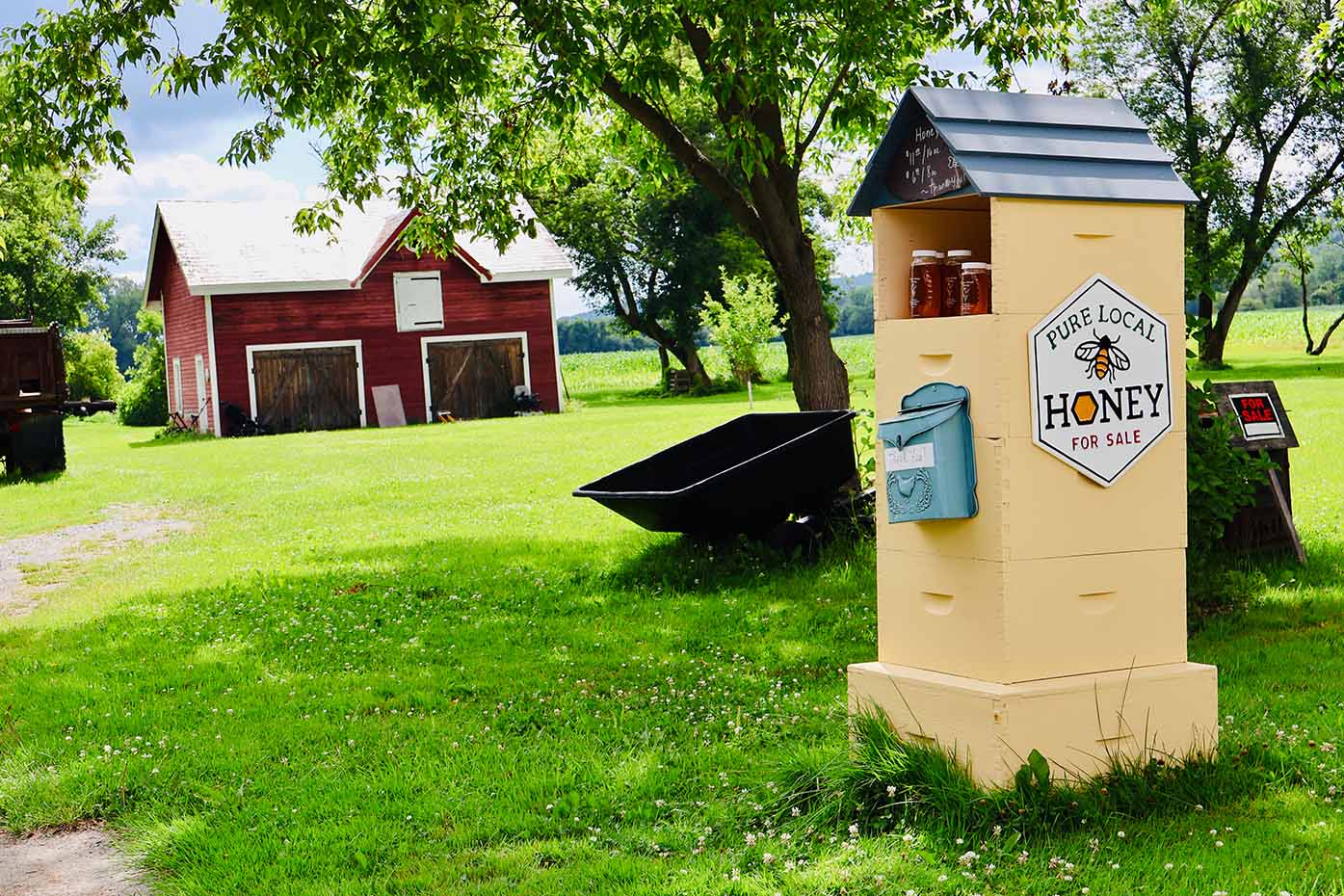
Michelle's roadside honey stand in Upstate New York
How to start: You'll need to purchase (or build) a well-designed hutch that's weatherproof with clearly marked prices and a secure cash deposit system. The most economical option is to build it yourself. Luckily, rough and old materials are seen as "quaint" and "rustic," so save some money and use the material in the garage from that unfinished DIY project, and make the best of it. Betterbee customer Michelle used old hive bodies to create her stand. She speaks from experience: "If you are in an area with enough traffic a stand will do well. You need to add signage before or after to let people know it's there before they pass by. I don't find a lot of people will turn around." Check with your local municipalities for rules about sign placement on public roadways, and always ask permission before installing a sign near a private home. Remember, permission is more likely to be granted if the request is paired with a free jar of honey! If yard space is limited, build a smaller cubby that can sit on your front stoop or be mounted to the back side of your mailbox post.
Popup Market Booth
Whether it's a farmers market or seasonal craft fair, there is usually plenty of opportunity to find an event to host a booth and sell your honey. Don't restrict yourself to a food market. Any event that also hosts a vendor area is a potential spot to set up shop.
Along the same lines, Betterbee staff spend much of the year attending beekeeper events and selling beekeeping supplies at vendor booths. We always research the event and the area and try to make an educated guess on what will sell. For us, record keeping is key. We compare costs and revenue over multiple years to help us decide which events to attend next. Sometimes, we break even, but we consider it a win because we were able to build relationships and get our products in the hands of our customers.
Pros - As with a roadside stand, you remain in control of your product in terms of the branding, display, and prices. Depending on the type of event, you may have a somewhat captive audience. Day-long festivals and events with entry fees make people hang around longer, and customers are more likely to make a purchase when they have multiple opportunities to browse. These customers are also more focused on enjoying and supporting local farmers, and they understand the value of local honey, whereas the town grocery store shopper might be looking for the cheapest option (enter imported honey).
Cons - Out of all of these options, the popup shop is the biggest time and resource commitment. Your display material and product will need the right vehicle, and the cost of labor can be significant as these events often require a full day (including setup and breakdown). More business preparation may be needed, and organizers may ask for paperwork proving insurance, proper registrations, inspections, etc. They may require membership dues or market fees, and some have strict participation rules
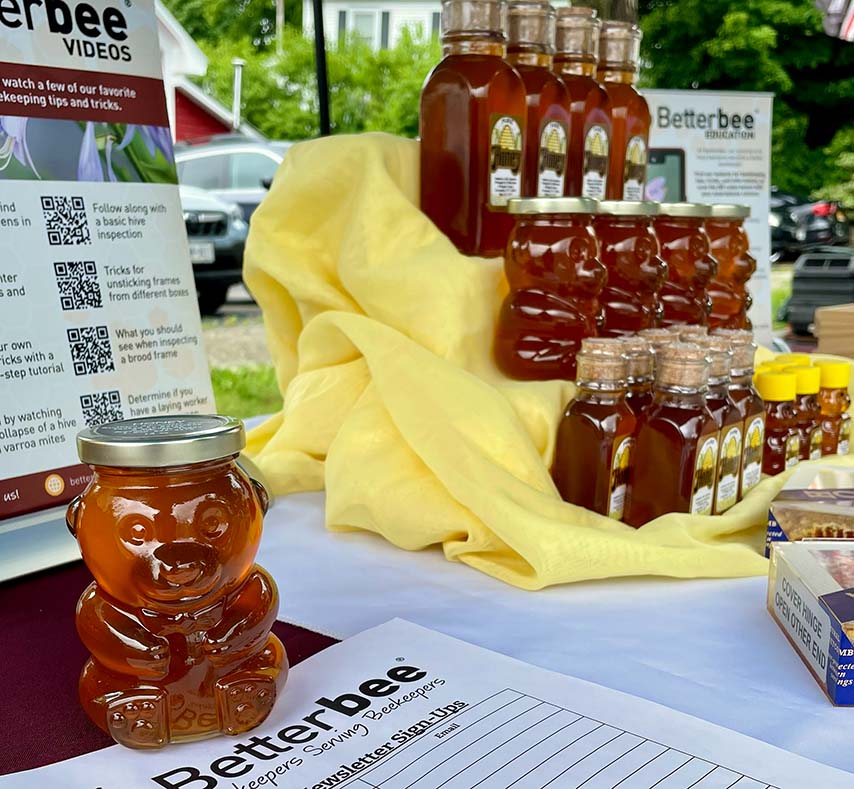
Popup market booth
How to start: An organized popup market takes vendor applications well in advance. It may be too late in this season to get into a summer market, but now is the time to start planning for winter and beyond. If a seasonal commitment feels like too much, consider applying to vend at a single event and see how it goes. As a popup shop, you'll need a way to take payment, produce receipts, and have enough cash on hand to make change. When Betterbee runs a popup shop away from headquarters, we use Square for every transaction, but there are lots of technology options, so do your research and choose which one is right for you. We also bring a carbon paper receipt note pad in case the technology fails us. Beekeepers Alexiev and Amber own the Mad Russian Apothecary. They started at craft markets and now sell at their roadside stand and in stores. Alex remarks on the chance of financial success: "They're all gambles. You never know until you do them." He also recommends that honey sellers seek out unique fairs and festivals and "find your niche." Theirs are supernatural fairs. Amber makes sure everything is branded - including themselves! The label isn't just for your containers- Their tent, tablecloths, and products all have the same branded logo as their honey label.
Retail Opportunities
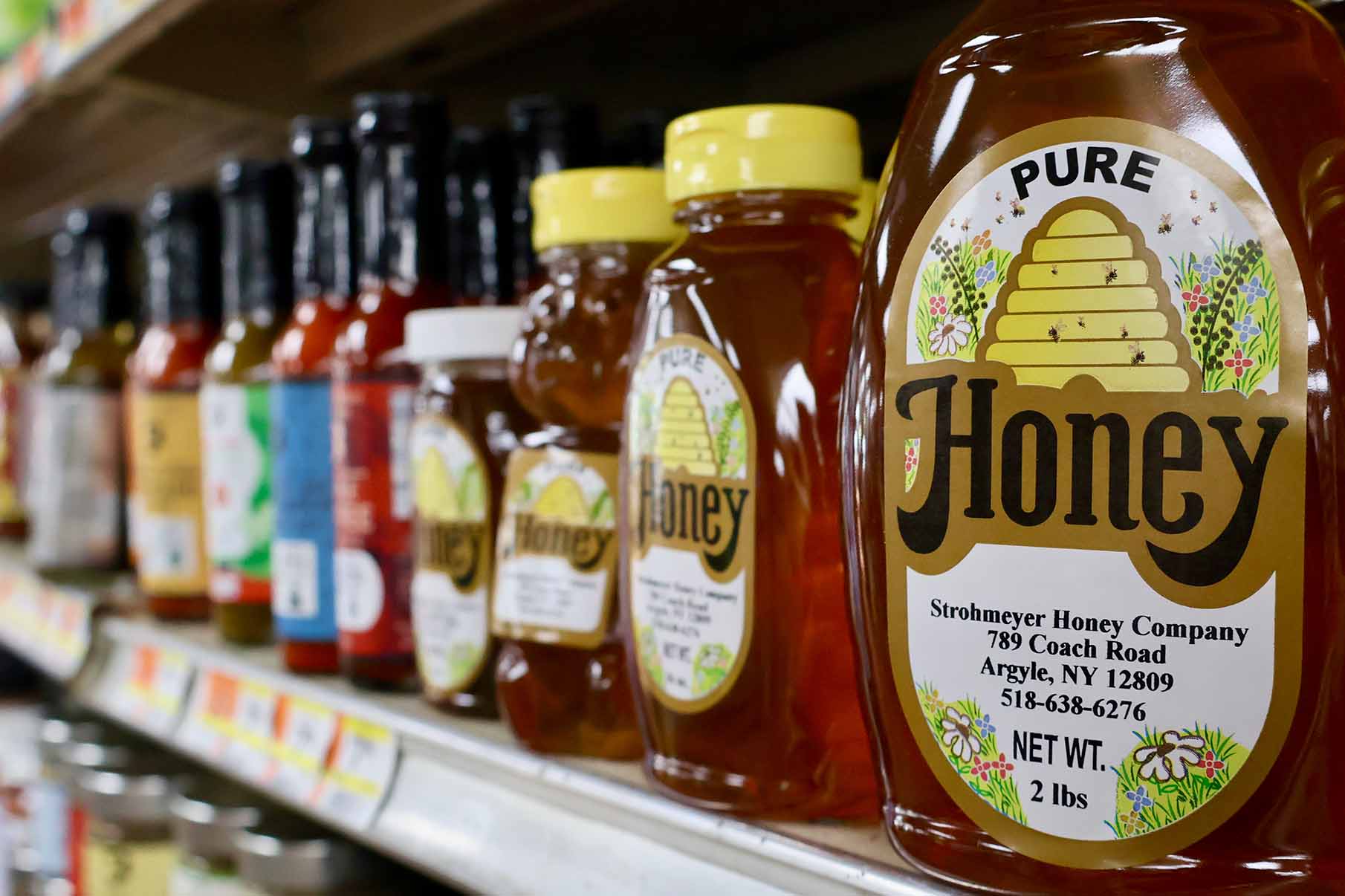
Mike Strohmeyer's Honey on grocery store shelf
Honey has become such a specialty food product, the grocery store is no longer your only retail option. Hardware stores, plant nurseries, restaurant lobbies, and convenience stores are just some of the possible venues. We sell our Betterbee honey in a single location, our one-and-only store in Greenwich, New York. We like to offer a honey jar size for every need or occasion. We bottle our honey in as small as 2-ounce bears and up to 11.6 pounds in big plastic jugs with prices ranging from $3 to $79.
When working with a retail business, there are two main types of sales agreements a beekeeper can make:
Wholesale - The business purchases a bulk quantity of your honey at a discount so they can charge more to their customer and make a profit.
Consignment - The inventory continues to be owned by the beekeeper, and a portion of the sale is kept by the business. Sometimes, the beekeeper is able to set their own prices, but the business owner may also want a say in the decision.
Pros - The business does most of the work for you. Be a good partner and offer to help with promotion, but leave the selling, restocking, and transactions to the store. You also don't have to worry about staffing. In general, your brand is being seen by a larger, more diverse group of consumers than those who simply drive by your house or attend a specific event. This extended exposure could lead to more sales overall.
Cons - You have less control of your product's final prices as well as your product's location and display in the store. Unless sales go through the roof, be prepared to make less money because the business needs their own cut of the revenue.
How to start: Jordan of Burnside Bees suggests that "the easiest way to break into selling your honey is to go into shops with a sample jar. I've never met someone who doesn't like free honey, and it's a great conversation starter. The worst they can say is no." Collin Graves helps his family run Clutch Market in Greenwich, NY. They sell bottled honey from Burnside Bees, and it's a consignment situation. They found him through an existing supplier- Jordan is their baker's husband! Collin says they welcome any new business: "We're not picky. Come in and ask! We're more than happy to chat and learn more. We try to include everybody however we can."
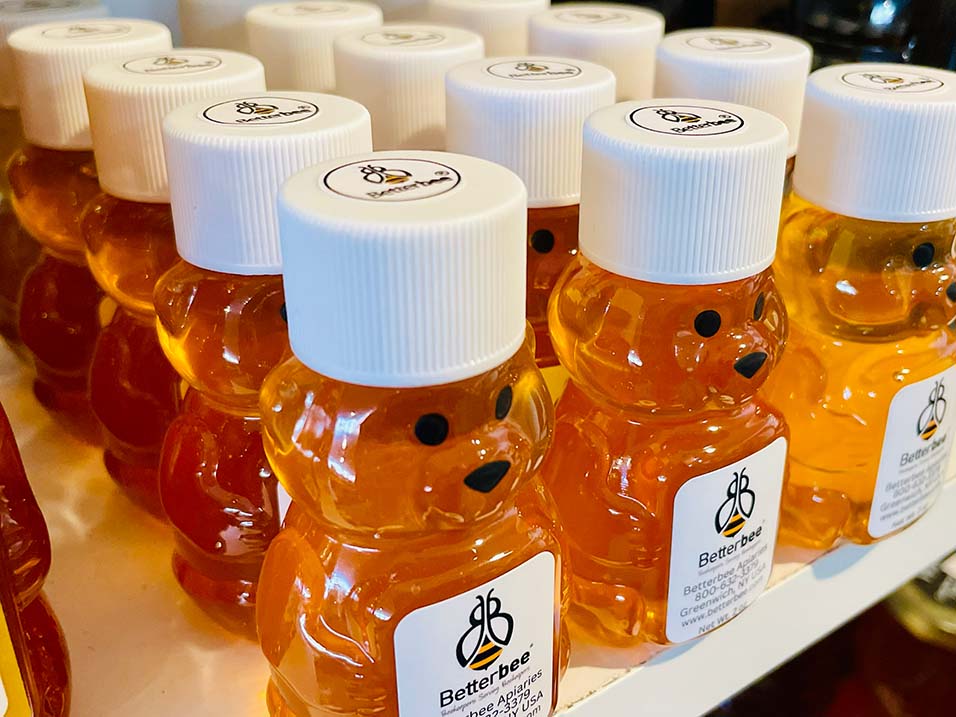
Free samples
Lean on existing relationships with stores in your community. Mike Strohmeyer of Strohmeyer Honey Company was a butcher for years and already had established a relationship with the owner of Independent grocer Byron's Village Market. It was a natural progression for them to start purchasing Mike's retail packs at wholesale prices. Over the years, Mike has tried it all: farmer's markets, wholesale, and retail. Currently, he sells his bottled honey to small, independent grocery stores and breweries.
Choose a path that works for you.
As you work through these decisions, choose the path that aligns best with your goals. If you're looking to get rid of your surplus and minimize labor and materials, consider selling in bulk. If your goal is brand awareness and growth, be prepared to be the salesperson at every vendor market you can attend. Pound the pavement, and give your pitch to businesses in your area. Are you flexible and just looking to make money? Get creative and consider selling your honey simultaneously on different levels. There's no rule about doing multiple at once. If the baker is willing to buy your honey for their baked goods, will they also consider retailing your bottled product at their counter? Continue with your roadside stand as you seek other sources of revenue, and keep copies of your one-pager and free samples around. You never know when the next business opportunity will come. All Betterbee staff who travel have personalized business cards to help form connections while on the road.
We can't stop the influx of imported honey, but we can help close the gap between supply and demand. If you're new to beekeeping and don't have honey to sell, you can still contribute. Encourage stores in your area to buy more local honey, and less imported products. Here are some talking points that can be shared with business owners in your area:
Selling local honey supports neighborhood/regional growth by keeping money and jobs local.
Selling local honey lowers your carbon footprint by cutting down on transportation pollution.
Selling local honey cuts down on transportation expenses, which means better margins and more money in your pocket.
Selling local honey helps develop a stronger brand trust because the beekeeper is your neighbor.
Selling local honey supports the American dream of individual success through hard work.